
Don't Automate a Mess.
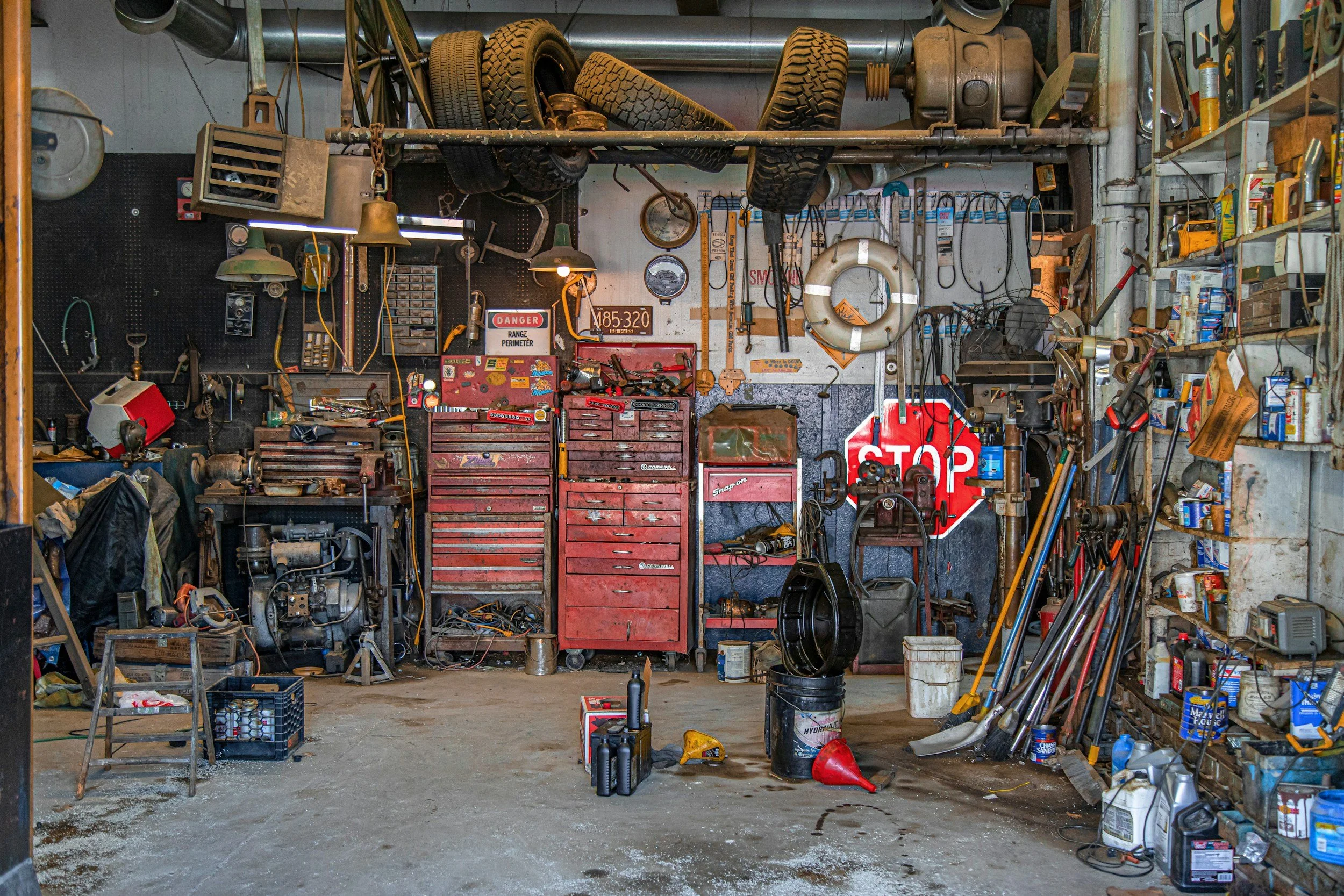
Automation gets sold as the answer to being flat out. Software will do it. AI will do it.
You'll get your Fridays back.
Sometimes that's true.
More often what happens is this: you take a process that's held together by you remembering things, hand it to a tool, and now it's held together by a tool that doesn't know what you know. The mess doesn't go away. It just runs faster and further from you
before anyone notices it's wrong.
Automation is a multiplier.
Point it at something good and you get more good. Point it at something broken and you get a lot of broken, very efficiently.
So before you buy anything, run the order.
1. Bin it
The cheapest process is the one you stop doing.
Before you make something faster, ask whether it needs to happen at all.
- The weekly report nobody reads.
- The approval step that has never once resulted in a rejection.
- The second spreadsheet that exists because the first one was hard to look at.
Plenty of small business processes aren't decisions.
They're sediment, left behind by a problem that got solved years ago. Nobody removes them because nobody owns them.
Stop it for two weeks.
If nothing breaks and nobody chases you, it's gone.
2. Give it a haircut
If it survives, cut it back before you build on it.
Count the steps.
Count the places the same information gets typed in.
Count how many people have to touch it before it's finished.
Then take out everything that isn't load-bearing.
This is where most of the actual time saving lives, and it's free.
A five step process done by hand usually beats a nine step process done by software, because the nine step version now needs maintaining, and you're the one maintaining it.
3. Get it out of your head
Here's the test, and it's the whole thing:
Can you write the process as instructions a new person
could follow without asking you a question?
If you can, it's ready to automate. If you can't, you've found the real problem. It's not that the task takes too long, it's that the task lives in your head, and every time it runs it needs your judgement to get through.
You can't automate judgement you haven't articulated. You also can't hire for it, delegate it, or take a holiday from it.
Writing it down solves four problems at once, which makes it the highest-value
hour in the list and the one everyone skips.
Do it in plain language.
Numbered steps.
Include what to do when it goes wrong,
because that's the part that's actually in your head.
4. Now let the machine have a go
Now you know what the process is, you can work out which bit of it a machine should hold.
Two things worth knowing here.
Frequency beats impressiveness.
The automation that changes your week is almost never the clever one.
It's the boring high-frequency thing, the confirmation email, the stock alert, the form that fills the spreadsheet instead of you filling the spreadsheet.
Forty small repeats beat one big transformation, and they're cheaper to set up and easier to unwind if they're wrong.
Exceptions are a warning sign.
If your process has more exceptions than rules "yes, unless it's a trade customer, or it's regional freight, or it's Sharon" you don't have an automation problem.
You have an undecided business.
Software will force you to decide, badly and under pressure, usually mid-rollout.
Better to make those calls first, at a desk, with nothing on fire.
The bit nobody says
Every automation you add is something you now maintain.
It has to be checked, updated when your prices change, fixed when the tool it connects to changes its mind.
That's not a reason to avoid it.
It's a reason to add fewer, better ones.
The goal was never a business full of clever systems.
It's a business you can leave for a week.
Bin it, trim it, write it down, then automate.
In that order, every time. Three quarters of the benefit usually shows up before you spend a cent.
If you hear your business from this article
& want to discuss how The Creative Unload
can help your business please reach out anytime
at thecreativeunload@gmail.com
The Creative Unload works with small businesses across the world from North East Victoria on systems, automation and the unglamorous behind the scenes underneath them.